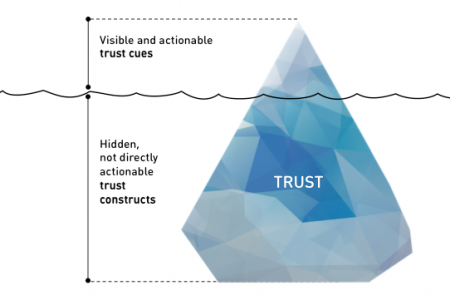
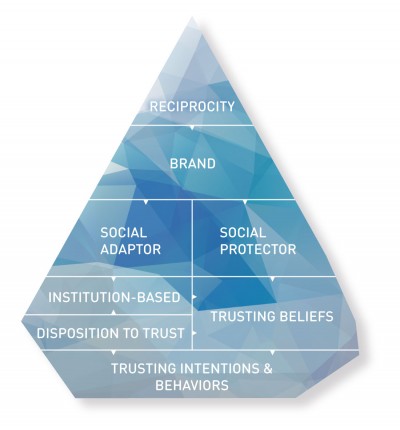
T he iceberg trust model differentiates between two major components that influence formation of initial trust. Trust constructs and cues/signals. Trust constructs refer to elements of the iceberg that are usually under water. They represent the schemata that unconsciously steer our behavior. Constructs represent mechanisms driven by our hot system (refer to chapter 2 for more details on insights in the mind of the digital consumer).
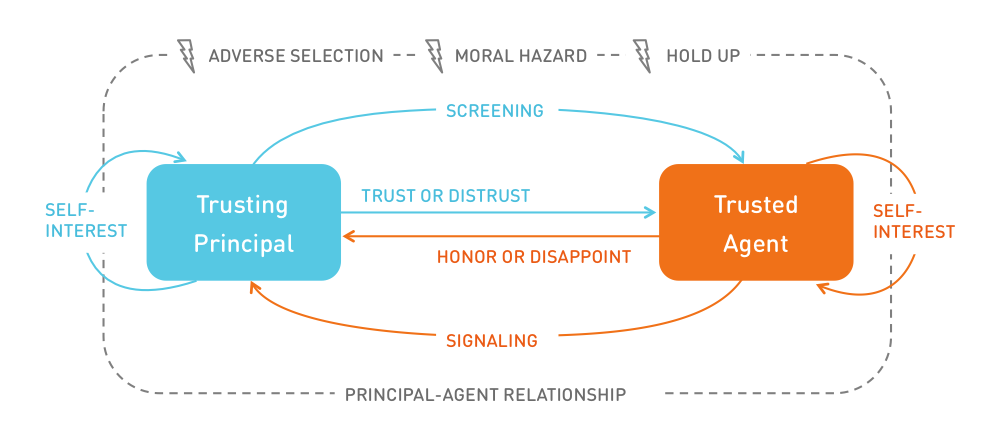
Cues or signals refer to strategic areas and design patterns companies apply to engender trust. They are above the surface and allow for reducing information asymmetry as outlined in the discussion of the principal-agent theory.
The model described hereafter is in large parts influence by recent research from local institutions, the University of St. Gallen (Hoffman et. al, 2015) and the Swiss Federal Institute of Technology in Zurich (Helbing, 2015). Furthermore, it is built on the fundament of social cognitive theory. As outlined in the last chapter, cognitive structures allow for orientation in complex decision-making situation. The resulting behaviours are not always rational because individuals are influenced by cognitive biases.
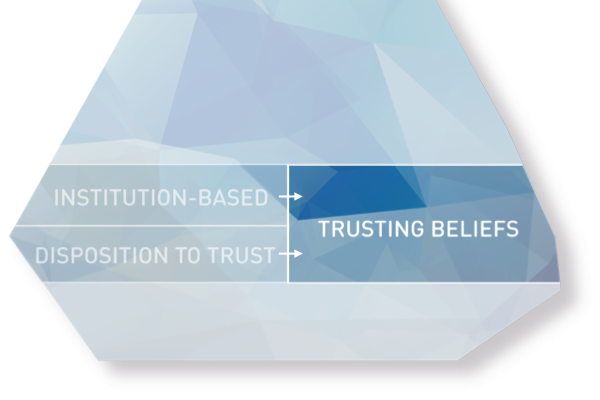
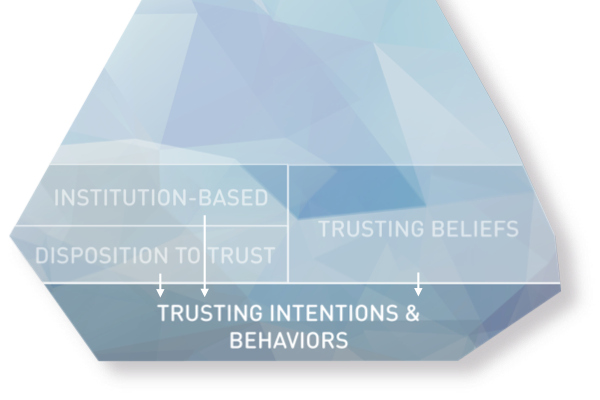
McKnight et. al. provide a very useful model for initial trust (2002). While analyzing the broad literature on trust in context of new communication technologies, they found that what most of the established models have in common is some combination of trusting disposition, cognition and willingness/intentions. Furthermore, they draw on the Theory of Reasoned Action to structure their argumentation. The theory shows that trust formation follows a catenation process. Beliefs lead to attitudes, which lead to behavioral intentions, which lead to the behavior itself.
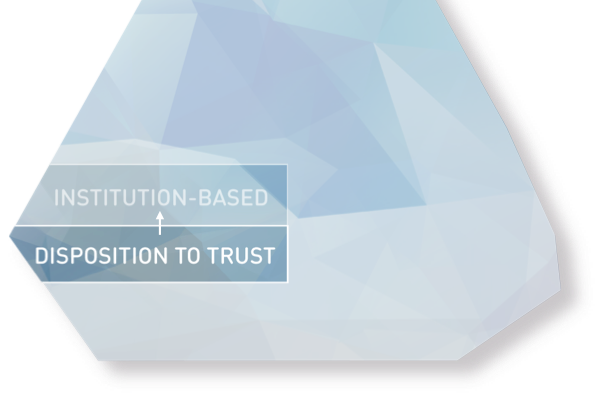
The base of the iceberg is characterized by four major constructs. Together, they describe the catenated process that forms trust und leads to trusting behaviours: